Wednesday, September 8, 2010

Character and Plot; Which is More Important?

Before I start this post, I am going to say that this will not be an extremely long post; just in case you were wondering. :)

Just so you know, I wrote this in two segments, two different nights--so I may have a different outlook on some parts of the post than others.

Now, in this post there are two opposing arguments; Characters are Most Important, and Plots are Most Important. I will investigate each of these arguments, and then come to a conclusion. But the real question at stake is this; should stories be character driven, or plot driven? Whichever side may win takes the bacon. :)


Characters are Most Important

Characters are indeed important. Some of the most important parts of a story are contained here. But are they MOST important? Here's a couple of points that seems to point in that direction (no pun intended!).

1) A character may 'make or break' a book. Bad and poorly made characters drag the story in the dirt, while the opposite is true as well; great characters pull stories up and place them among the best stories of out time.

2) Good villains make or break a book. The villain is just as important as the other characters, more so in many cases.

3) Readers will care more about the story and recommend it to more people if the characters are done right. The character in LOTR are wonderful and real to us--and that is part of what makes so many LOTR fanatics in this world.

4) Characters narrate. If a character that you don't like (meaning a two-demensional, boring character) is narrating, the narration itself is flat. On the other hand, if your favorite character is narrating, the narration seems more alive to you.

So does this prove the supremacy of Characters? We'll see.


Plot is Most Important

Characters are well and good, and perfectly necessary for a successful story, but it is plot that is most important. Right?

1) Without a plot to back them up, the characters are useless. Who cares about the character development when your plot is so unoriginal and un-arresting that it turns off readers from the first whiff?

2) Plot is what keeps the readers going--not the characters.

Not very many points to back Plot up here, but the two I have are strong. Surely this will prove, once and for all, that Plot is clearly the better.


The Overview

In this part, I'll address each point.

C-1) "A character may 'make or break' a book. Bad and poorly made characters drag the story in the dirt, while the opposite is true as well; great characters pull stories up and place them among the best stories of out time." True or false? That may be up to the reader reading this, but in my view, this is mostly true. Sure, bad characters drag the story in the mud, but the stories can still limp on.

C-2) "Good villains make or break a book. The villain is just as important as the other characters, more so in many cases. " Basically, this is the same thing as the last point. I'm not sure why I even wrote this. :) But the same reply I gave above applies.

C-3) "Readers will care more about the story and recommend it to more people if the characters are done right. The character in LOTR are wonderful and real to us--and that is part of what makes so many LOTR fanatics in this world." This is absolutely true. The characters, not the plot, are usually what gives a story meaning. What the character does is what gives meaning to a story.

C-4) "Characters narrate. If a character that you don't like (meaning a two-dimensional, boring character) is narrating, the narration itself is flat. On the other hand, if your favorite character is narrating, the narration seems more alive to you." To an extent, this is true. But if the writer does his/her job right, we'll either forget who's narrating, or be greatly aware of the narrator and share his/her thoughts--which also takes a good writer, partially invalidating the point. You see, if the writer has enough skill to get the reader inside a character's mind skillfully, why can't s/he develop the characters well?

P-1) "Without a plot to back them up, the characters are useless. Who cares about the character development when your plot is so unoriginal and un-arresting that it turns off readers from the first whiff?" This is mostly true, in my opinion. What good are characters when the plot is bad? But it depends on the reader. Some readers really need to connect with characters in order to get into the story, while some are indifferent. This means that some readers won't mind the plot, while some will be quite put off by it--so it is partially a matter of opinion. However, there are certain points where you hold up your hands and say, "I can't take this plot anymore," and put the book down.

P-2) "Plot is what keeps the readers going--not the characters." The above answer/explanation/dissection I gave also applies to this. In a way, this is a matter of opinion. Some books, like "The Shadow and Night" by Chris Walley, rely on characters much more than plot to get the reader's interest, though the plot is intriguing as well. Others, like "Offworld" by Robin Parrish, rely on plot to keep the readers reading.

Conclusion

This is what the post is leading up to; did any of this help you with your novel? Not really. But here I'll try to capture the usefulness of this post.

So, which one was more important? Plot or Character?

Neither, believe it or not.

Inevitably, when in the business and bustle of writing--assuming you know other writers (I didn't until I made this blog in March!), you will hear about 'plot driven' books, and 'character driven' books. That discussion is for a whole 'nother blog post, but let us say that those are the two categories many books fall into. But what category should your book fall into?

Neither, believe it or not. You shouldn't focus on just characters, or just plot in your novel. If you're good at one thing, like characters, but bad on another, like plot, it may be good to focus on one or the other to 'balance' your novel out, but you shouldn't focus on just one aspect. Think of character and plot as a whole. They aren't opposing forces; character doesn't drive out plot! Or vice-versa!

"They are all part of," (to borrow a Bible verse) "one whole body." One does not work without the other! They are (or should be) intricately woven together until you can't tell where one began and the other ended; plot and character molded together gives you the best of both; the meaning that character brings, yet the suspense that plot can give. Each effects the other; if you successfully develop your character, you successfully develop your plot, and vice-versa. If you make your character meaningful, it makes his/her goal meaningful; the plot.

Hopefully I have showed you, in my past two posts, the potency of both character and plot alone. But together, woven into a compelling story, they can triple their strength and make your story all the better for it.


Saturday, September 4, 2010

Characters; An Overview

NOTE; I just posted some excerpts from my novels on my other blog, in case you want to check them out!

Wow. Where to start? This is every inch as massive a task to write as the Plot post was. So, like the plot post, let's start at the beginning.


CHARACTER TYPE

Assuming you know what gender your characters are or are going to be (LOL), you must next find out or define what kind of character they are; what type. The problem lies in the amount. There are SO many different kinds of characters that I won't even bother going over half of them. Instead, I'll focus on the kinds of characters that most novels (fantasy novels especially) usually have.


1) The Protagonist

This post is not only about what kinds characters there are (although that helps) but also some tips on how to make them realistic and relatable. An unrelatable cardboard character doesn't do a novelist much good.

The Protagonist. Basically the most important character there is in any story. The Hero(ine), the Good Guy (or Gal), whatever you want to call him/her. If you don't succeed on this character (at least partially), your novel will flop. Utterly.


2) The Companion (or Ally)

Since most of you have a plot type as a Heroic Quest, all quests must naturally have a companion. The Companion(s) is/are usually one of the more important characters in a novel, after the Antagonist. This character is one who believes in your Protagonist, encourages him/her, and accompanies him. In LOTR, the Companion is good old Sam; and I think you'll agree that he was developed well.

Conflict between the Companion and the Protagonist is sometimes a good idea, though rather depressing to write. In the movie version of LOTR, Frodo, after Sam asks if he can 'share' the Ring, tells Sam to go home. I dislike that part, but I have to admit it is good for character development; because Sam decides to go back and help Mr. Frodo.

There can be various types of Companions in a novel, however. The Boromir kind of Companion is different than the Sam kind of Companion. I'll call them the 'Companion' and the 'Ally' for this post; The Companion being Boromir, and the Ally being Sam.

3) The Antagonist (the Villain)

This is, after the Protagonist, the most important character. Good villains make good stories, as OYAN says.

I'll discuss this more in-depth later in this post, but there's one important thing I must note; make your Antagonist human, with human needs and desires. A human-like Antagonist is chilling because you recognize part of him in yourself.

4) The Mentor

This is the role of Obi-Wan Kenobi in Star-Wars. The Brom in Eragon. The Gandalf in LOTR. A story, on select occasions, does not always need a mentor, but it is best to have one. The Mentor is someone who the Protagonist can learn from about various things; the world, God (or whatever name he might go by in a Christian fantasy novel), etc.


5) The Minion

This character is in league with the Antagonist, or represents the Antagonist's 'morals' (evil). Good guys (or Gals) gone bad, betrayers, messengers, generals, etc. Examples of Minions from LOTR would be Smeágol, various Orcs (like the ones that had taken Merry and Pippin captive), etc.

6) The Supporting Cast

This is the sixth kind of characters, and it varies. Kings, innkeepers, various other people, etc. fall into this category, providing they are not traveling with your Protagonist, in which case s/he would become an Ally or Companion. This is a vast group, with a lot of different characters. To give some examples from LOTR; Bill Ferny, Glorfindel, Denethor, etc.


These are just some of the kinds of characters floating around in the world of literature.


THE ELEMENTS OF CHARACTER

Just like plot, there are certain elements that drive characters, especially Protagonists. What things make a character need the story goal? What force drives them through pain and disaster?


1) Morals

This is one of the things that makes your characters memorable. They have morals. Villains and Heroes (or Heroines), Antagonist and Protagonist alike have morals. Antagonists have bad, evil morals, whereas the Protagonist is the opposite. S/he represents a good moral; Kindness, forgiveness, humility, etc. An Antagonist represents hatred, bitterness, cruelty, etc.

So pick a specific moral, and have your Protagonist embody it; and have the Antagonist embody the opposite. The Protagonist is kind; the Antagonist is cruel. Better yet; have your Protagonist suffer from his/her morals. Because s/he is kind, s/he is ridiculed. This proves the Protagonist's willingness to suffer for what s/he believes, and readers admire that.

Morals drive a character. Frodo wants to destroy the Ring because it corrupts. To narrow it down, Frodo leaves the Fellowship at the end of The Fellowship of the Ring because he knows the Ring will slowly corrupt every one of the company, as it did Boromir.


2) Stakes

The stakes of the plot are one thing that drive the character to do what he does. Frodo not only takes the Ring upon him to get rid of it for himself; he wants to destroy the Ring to protect the Shire. As the stakes grow higher through the novel, the Protagonist feels an urgent need to finish the quest, because its no longer his quest; the quest is all that is stopping the Antagonist from prevailing.


3) Love

Love for a person may drive a Protagonist, but I'm talking about a broader form of love. Frodo loves the Shire so much that he will undertake a terrible quest to save it. How can a Protagonist just sit and watch the things he loves be destroyed? No, he has to complete the goal and save them.

But make sure that you define why your Protagonist does what s/he does. It deepens the understanding the reader has for your character, understanding that the reader can relate to. When your reader can relate to your Protagonist in a way that makes them care about him/her, then you've done your job.


There are other things that drive a character, but these are the main ones, some of the ones the others flow from.


THE CHARACTERS; A-Z

So how exactly does one create believeable and relatable characters? Is there some secret formula that develops a character? Not exactly, but I'll try to show you what I know about character development.


1) Choices

Choices. Choices are the things that define your character. By the Protagonist's choices, you can tell what kind of a person they are, and that creates understanding--which, as you know, creates relateable characters, someone the reader can care about.

What kind of choices should I use to create development? you may ask. Here's a couple;

1. Difficult choices. This is the most important kind of choice; between two negative outcomes. The choice your Protagonist makes defines who he or she is. The choice between rotting fish or raw rabbit. ;) Sorry if I grossed you out there. Anyway, your character must make that choice--and pay the price. To use an example used in OYAN (it's a great example), in Spiderman, Spidey has to make a choice; his love, or a bus full of children. This is a wonderful opprotunity to reveal what kind of character Spiderman really is. Unfortunately, he does the thing that no writer should ever, ever do. He did both. He saved the love, and he saved the children. Never do something like that; you lose an opprotunity to reveal your Protagonist's character and give your character distance from the reader.

2. On what to do. Have the character make wise choices with disastrous outcomes. Sure, the way through the forest seemed easier than the way through the marshes--certainly wiser--but how was the Protagonist supposed to know the forest was filled with killer monkeys? Wise choices, disastrous consequences. You never want your character do to the less-wise thing; even if it turns out to be disastrous later. The only exception is if the Protagonist was warned against the killer-monkey-road. :)

3. Chances to go back. Frodo, so many times, was offered the chance to give up the Quest and go back to the Shire; but he didn't. Like the wise Sam Gamgee said in the Two Towers; "Those people had a plenty chances of going back, only they didn't. Those were the stories that meant something, Mr. Frodo." If your character is offered a chance to go back, and s/he rejects it, it resonates within the reader, and, (guess what?) creates understanding. And we know what that creates!


2) Suffering

I touched on this in my earlier post, because it is very important; what your character is willing to suffer, and how s/he reacts to it reveals character.

As I said before, "An item is worth however much the buyer is willing to pay for it." If the Protagonist has to pay a high price--loss of a friend, loss of his old life, wounds, etc.--then it proves just how much the goal is worth to him.

What is the Protagonist's reaction? Does s/he bathe him/herself in self-pity? Or does s/he accept that price and stand strong? If s/he does accept the price, it creates admiration in a reader, which creates...

And one more thing, one that I said in my last post that seems necessary to put in here; The fulfillment of the story goal may need to have a lasting price to make it all the more worthwhile. In LOTR, Frodo can no longer go back to his own life; the Ring and the Ringwraiths have wounded him for life, and the power of the Three Rings fade, making most Elves sail over the Sea into the West, along with Frodo. The lasting price can help make the ending more meaningful and sad.


3) Action

What your Protagonist does also creates development. This is closely related to the Protagonist's choices, but there is one thing that is different and stands out; in real life, it can be fairly easy at times to decide what to do. The real challenge is in doing it; it takes courage, just like when Frodo made the hard choice to leave the Fellowship. As it says in the LOTR; "I know what I have to do, only, I'm afraid to do it." When the Protagonist does what s/he had decided to do, it creates admiration in the reader. They know first-hand how hard it can be to do the right things. Which brings me to one more point; if the Protagonist does the right thing, it also creates admiration; doing the right thing can be hard. And admiration creates...


With this, I wrap up my post. Not quite as lengthy, perhaps, as my Plot post, but I hoped it helped you out. :) Feel free to comment if you felt I missed a certain point. I can make another Character post again, sometime soon.

Oh, and as for trivia; what does admiration and understanding create? :D


Wednesday, September 1, 2010

The Plot; An Overview

Hm. Where to start? There's so much I could say on just one aspect of plot. I could write an entire series of posts on several of the greater aspects! But I am going to attempt to pack it all into one post. It will probably be the longest post I have ever written.

So, where to start? Presumably, we should start at the beginning.


PLOT TYPE AND GENRE


Before writing, most of us sit down and think about what we are going to write. We think, at least a little, on what genre and plot type we might write in. So that is where I will start.

First of all--the plot type. There are three basic types, according to most writers (though these are often intermixed--indeed, they almost should be); Change of Character (called by the One Year Adventure Novel curriculum 'The Man Who Learned Better'), Romance, and the Heroic Quest. I am almost positively sure that most all of the writers who read this blog write in the Heroic Quest plot type. The title says it all--it's about a quest where the Protagonist has to overcome various obstacles in order to achieve his/her goal. My own novel is the Heroic Quest.

As for the other plot types; An example Change of Character (The Man Who Learned Better) would be A Christmas Carol. The Change of Character plot type is when the plot basically revolves around the change of character that happens to the Protagonist. Romance, of course, needs no explanation.

Now that we've covered plot types, we can go on to genre.

Almost everyone knows what genre their story takes place in. Fantasy, sci-fi, historical fiction, modern fiction, thriller, horror, nonfiction, etc., as well as the sub-genres within, are some common genres. My novel is fantasy, specifically Christian Epic Fantasy (fantasy that takes place outside this world).

Now I'm going to assume that you are writing either a fantasy or sci-fi novel. Or at least fiction. I must note here that all of my post now, though useful to just about anyone, is biased towards fantasy and sci-fi, specifically fantasy. To make things a little less confusing, I'm going to attempt to use my own novel as an example. Everything after this (genre and everything) will be said with my novel in mind. :)

So now we have our basic stuff set in place! My novel is Heroic Quest and Christian Epic Fantasy.


THE ELEMENTS OF PLOT


Now I can discuss the Elements of Plot; the things that drive a plot. The thing that makes them 'go round', so to speak.

1)
Conflict

I don't know how many times I've said this, and how many more times I will say this, but conflict is essential to a good story. Every plot type and every genre has to have conflict. It's obvious in the Heroic Quest that you need conflict--after all, what's the worth of a quest if you don't even have to try to achieve it?--but there needs to be conflict in other plot types as well. In Change of Character, the conflict is mostly internal. Will the Protagonist choose to change for the better or the worse? The 'better' and the 'worse' are what make up the conflict.

But how do you write conflict? Good, compelling conflict that sucks you into the story?

By the way, I don't have all the answers to that question. I'm just going to tell you what knowledge I have learned over the course of writing my novels.

Be warned; I'm about to jump into a sub-list within a list. But I must make one note before I do. I am assuming you know how to write conflict when making this list. If you don't, then you should probably go and read a lot more. :) Maybe you think about buying a writing book or OYAN. :D

1. Everyone knows about some kind of conflict. I've had conflict with my siblings on numerous occasions, to be sure. So, whatever knowledge you have--let it seep into the story. If you fence, then you know how to write a sword fight; if you have had a fight with a friend, then you know how to write a scene where the Protagonist fights with his/her friend. And so on.

2. Write conflict not only from external sources (coming from the Antagonist) but from within. A bitter fight erupts in a friendship. The Protagonist disagrees with a decision and takes a rash move to argue. Even conflict within the Protagonist's own heart--what decision should he make?

3. As for external sources, don't let your Protagonist win too often. Failure and disaster should be constant. That isn't to say that your Protagonist can't win every once and a while--but the price of the victory must be high.

Conflict should be constant. If you have a chapter that has a low amount of conflict, either cut it or ruthlessly edit it. You should never have a chapter without some degree of conflict, internal or external. Conflict is what brings the reader in closer for a look. It's like passing by a fist-fight--you can't help but stop to see what's going on.


2)
Characters

Characters drive a plot. That much is plain. The Antagonist, the Protagonist, the supporting cast of characters--friends, allies, enemies, and traitors, to name a few. I'm planning to do a character post later, so I'll save this for then.


3)
Suspense

This drives a plot, to a lesser extent than conflict. Suspense is what you get when you're about to go to the doctor's office to get a serious check done--and then you find out that it's delayed until tomorrow. The sense of foreboding and dread--meaning the anticipation of what's to come. You have a feeling of what's going to happen, but you don't know for sure.

So how do you create successful suspense? I'm by no means an expert on suspense, but here's a few tips that may help.

1. Give hints. OYAN gave such a good example of this that I can't help but use it as well. Think about the Mines of Moria. You knew that the Fellowship would eventually come to the Mines, simply because, when Gimli suggested they take that route, Gandalf replied, "No, Gimli, I would not take that road unless we had no other choice." See the pattern? Eventually, they don't have any other choices, so they pass through Moria. In a similar way, have one of your characters drop hints at what is to come, so when it does come, the reader will say, "Wow! I should have seen that coming."

2. Make the end result bigger and badder. When Gandalf said that he would not go to Moria unless he had no other choice, he told us, as readers, two things; one, that they would go there, and two, that something really bad is going to happen there. If you drop a hint, the hint must be an understatement of what is to come. The Fellowship finds that Gollum is following them, they discover Balin's tomb, and Orcs attack them. All of that is bad in itself, but then the Balrog enters the scene, and we say, "Whoa! Didn't see that coming." And then (Spoiler!) Gandalf falls from the Bridge of Khazad-dum. That makes Gandalf's ominous hint of what is to come seem like small potatoes compared to what REALLY happened. And that is your goal. If you succeed in doing that, when you make bigger and badder hints, your readers will wonder, "If something so bad as what happened before came from that other hint, this one must be really really bad."


Besides all of the things that I have just told you about what elements drive the story, there are other, smaller things that I don't have time (or energy) to go over. But there is just one more thing; all of the things that drive the plot--disaster, conflict, characters, and suspense--slowly but surely, with numerous setbacks, drive it toward the Protagonist's goal.


THE PLOT, BEGINNING AND END


Now we have the story type, genre, and the Elements of Plot, which all combine to make this; the actual Plot. A plot is usually contained into three sets; beginning, middle, and end. (duh). Usually, the middle is as long as the beginning and end put together.

But before I start my list, I ask one thing, if you are about to write a book; try making a synopsis. Write the basic elements of your story together, and then make a carefully worded overall synopsis that sounds like what you might read on the back flap of a book. This would be to hold your attention and keep you focused on the plot, for those of you who try to finish a novel but often quit. If you find you can't write a synopsis that satisfies you and sounds intriguing, then you may want to adjust the plot; if it doesn't interest you, it won't interest others.

1)
Beginning

The beginning is one of the most crucial parts of the plot. It does two major things if done correctly; it holds your reader's interest, and it holds yours. It sets the stage for the rest of the story. If you mess up here, you mess up the entire story--and if you mess up the story, it will end then and there.

I once wrote a 'prologue' (about three or four years ago) with a plot that was useless. The overall imaginativeness of it was like zip. But yet, to this day, it still intrigues me. I don't even know what in it intrigues me, but when I wrote that, I wrote something right. The writing itself was terrible (badly in need of editing), and the character in my characters was zip, but something about the way I wrote it still clung to its fragile, cracked shell. That's just one example on what should happen if you write a beginning; it should force you to keep writing, if only to find out for yourself what happens next.

But besides the initial stuff, like a prologue, what are some necessary elements for a beginning?

1. The wonder. You should try your best (especially if you're writing a fantasy novel) to capture the wonder of the world your Protagonist dwells in, whether it be Rome, England, Mars, or Middle Earth. But don't forget that everything has a 'dark side' to it, and everything will always have a dark side until Christ returns.

2. Set the stage. Most of the time, unless you are writing a prologue--in which case it is acceptable--you can't charge on to the stage without setting it up. What is the use of characters, plot, and suspense if your reader doesn't have an accurate view of your world?

3. Show what's at stake. By the time the beginning has ended (no pun intended!), you need to have established what's at stake, why your Protagonist is doing what s/he is doing, and what the goal of the story is.


2)
Middle

The middle, according to many people, (including me) is the hardest part of a story to write. It's not just the way to get to the beginning to the end, or a place for long and tedious travels; it's the best place to build characters, further establish the battle lines, draw the stakes ever higher, and prepare your Protagonist for the battle with the Antagonist (not necessarily literally, depending on your genre).

How are we supposed to do this? Well, let me tell you; I am definitely not experienced as I may seem in this part. Like before--I don't have all of the answers to this question. But I will try my best.

1. First and foremost; Don't give up and always keep writing. This can apply to plot or even novels in general, but the middle part of a novel is the easiest part to give up on. You may have read a book where the characters are in either a snowy land or a desert. Oftentimes what happens can be summed up in one sentence; keep going, or give up and die of thirst or cold. The same phrase applies to writers and their novels; keep writing, or your novel will die. Don't give up on it. If you feel like what you're writing is junk, then guess what; it probably is. But why should you care? My novel, when I first finished it, had very little silver in the diluted mess that it was. But over time I have polished it and polished it, as much as I am able. Just think; if I had given up during the time it took to write my novel (I came very close to it on several occasions), I wouldn't be in the position I am today. I most certainly wouldn't be writing this blog post today if I had given up. So basically; don't give up! and always keep writing.

2. Be inventive. If you think part of the middle is boring, then spice it up! Add a surprise attack, get someone sick, or have unexpected friendship be passed the Protagonist's way.

3. Looks like I'm going to have to say it again; add conflict. More conflict. Really.


3)
Ending

The ending, also, is an extremely important part of the plot. You should try and have the ending to be as meaningful and satisfying as possible. You want to fulfill the reader's expectations, namely, the Protagonist's goal of the story, but you have to do it in a way that the reader did not expect.

The ending is where the Protagonist finally experiences his/her hugest victory, but also their worst loss. Victory must come at a price, or else it will devalue the worth of the goal. The amount of suffering poured into the journey there will determine the value of the goal. In other words, (to bring economics into it!) "The item is worth whatever the buyer is willing to pay for it." The greater the price, the greater the worth. The greatest victory comes at a great cost.

There are several main things you should keep in mind when making an ending, however;

1. Make a showdown! The clash between the Antagonist (assuming you have an actual clash) and the Protagonist happens in the end. It's the most climactic moment in the story--or it should be. Most of the time, the Protagonist wins the fight with a high price. The only exception to that is in a series; the Protagonist almost always loses that battle.

2. Do you want to fulfill the goal of the story? Presumably you do. If so, then fulfill the story goal; but fulfill it in a way the reader did not expect. The ending of LOTR is a great example. (NOTE; If you haven't read LOTR or seen the movies, you should skip this next part) Frodo is finally in the Cracks of Doom. He's in Orodruin, the Ring dangling over the edge. All he has to do is drop it into the Fire, and the story goal will be fulfilled. But he turns and claims the Ring for his own, so close to the story goal. You can imagine the shock we get through this. "No!" we yell, "Just drop it in!" Not only does this fulfill the story goal in an unexpected way (or at least it will in a moment), but we can't help but think, that after all of the suffering and disaster that the Fellowship had faced on the way, the goal must be fulfilled. And then Gollum comes into the scene. He fights Frodo for the Ring and bites his finger off. And then, as Gollum claims the Ring, he falls into the Fire; fulfilling the story goal in an unexpected way.

3. The fulfillment of the story goal may need to have a lasting price to make it all the more worthwhile. In LOTR, Frodo can no longer go back to his own life; the Ring and the Ringwraiths have wounded him for life, and the power of the Three Rings fade, making most Elves sail over the Sea into the West, along with Frodo. The lasting price can help make the ending more meaningful and sad.


So there it is! I think I have covered many of the subjects that I wanted to. If you want to note something I missed, feel free and comment! I'm writing this late, so I may have to do another Plot post tomorrow or the day after.

Oh! And one more thing; try not to put resurrections in your novels. I just read a certain resurrection in the fourth book of BOTB and I wasn't impressed. I liked how the author made that particular character die; it seemed good and final, a sacrifice. But L. B. Graham kind of ruined that part. Otherwise, I am loving the series. :)

With that final note, I am off at last. I should bother you again tomorrow or the day after with either a character post or another (though notably shorter) Plot post. :)

Monday, August 30, 2010

A Quick Word

Hello, all! I'd just like to say that I'm going to be cutting the regularity of my posts to once every two days or less, due to schoolwork and a need to focus more on my novel. As you can see, it hasn't budged from that count in quite a while. :)

Also, I'd like to open up a question for you readers--what subject of writing would you like me to speak on? I'm having a hard time coming up with topics. Outlining? Suspense? The Plot? Fantasy worlds in general, or a specific part?

Feel free to suggest anything you wish, and I may pick a subject or two out of the center. :)

Saturday, August 28, 2010

Review; Across the Face of the World

From a tiny snowbound village, five men and women are about to embark on a journey that will change their lives -and the destiny of their world. For two thousand years, since he was cast out from Dona Mihst, the fabled Undying Man has been plotting his revenge on the Most High. The Destroyer's plans of vengeance are nearing fruition-and he will allow nothing to stand in his way. But one man has escaped from the Destroyer's prison, and even though the Lords of Fear ride in pursuit, he will bring word to his people. It will be up to his sons, Hal and Leith, together with a small group of villagers, to warn their world of the coming war. (Description taken from Amazon.com)

Until this book was recommended for me to review, I had never before heard of this author or this book--and I was glad I did.

Across the Face of the World had a Tolkienish feel to it in matters of plot, description and imagination, but all to a lesser degree. The characters were defined, but I felt that the author could have spent a little less time describing their often tedious journeys and a little more putting in more conflict and character development. I never completely cared for any of the characters--but then, I'm not an emotional person. :)

The surrounding lands that come into effect, however, were magnificent. Traditions, culture, countries, and lands were all imagined in great detail, which partially made up for the lack of character development.

The plot could've been more original as well (but then, there are few plots that are entirely original). I feel it was pulled off well, though, and it definitely picked up near the end. However, though I compared it to LOTR, it did not quite have the 'epic' feel that LOTR does. Hopefully that will improve with the next book.

All in all, it was a good book. I ended up buying the second, which I have yet to read as I just finished reading LOTR for the sixth time. However, the low price DID have something to do with that--and the fact that it wasn't available at the library. :)

Rated 8.1 out of 10. Good enough to look for at the library--you might even want to buy it. It's a cent plus shipping used on Amazon. :)

Friday, August 27, 2010

Speed-Writing

It is possible to speed-write. Really.

Warning; long post ahead. Hopefully it may enlighten you, but just beware of longness. :)

A few weeks ago, maybe less, I decided to sit and write in my third novel after putting it off for a month. Before long, the plot went shoom! and took off like a bullet. In three days, I wrote roughly ten thousand words... Some of you may have noticed that my word count above this post has jumped to 30,000 words--only six hundred words less than my first novel, which has been my longest work of my life...up until now.

So does this prove my point? What makes a writer speed-write? How can it be done? I'll attempt to answer this in my post.

So some of you may be skeptical. "Ten thousand words? You're pulling my leg." No, I'm not. I really did write ten thousand words in three days, and it wasn't because I was such a 'great writer'--because I am not. Not close to it.

Here's the combinations of events that caused this strange phenomenon.

1)
Inspiration
This one doesn't exactly pop up when you need it, so it's a bit hard to find.

2)
Need
I needed to write, partially because I didn't have anything to read at the time.

3)
Schedule
I had time to do it; and I had to tell myself to do it as well--that's important

4)
Plot
The plot had me excited. I was laying awake in bed (does anyone else do that?) and I find that my mind wandered to my novel. The plot was a little floppy, which made me wonder what was wrong with it. I flipped a few mental strands of the plot around, and pow!--I was struck dumb by an idea that enforced the plot of my other books and advanced that one.


Now, here's a few suggestions on how to best use these forces to 'speed-write'.

1)
The Nudge [Inspiration]

Inspiration doesn't come at your beck and call--all writers (or most of them) know that. Inspiration comes and goes, and most of the experienced writers will tell you that you can't depend on inspiration. Well, guess what; you can't depend on inspiration. ;)

But, as I wrote in a post some time ago, inspiration can be nudged. Start writing. Immediately. You'll find that some degree, at least, of inspiration will come once you get going.

2)
I Wanna! [Need]

Like inspiration, need isn't set in stone. Sometimes you feel like you need to write, and sometimes you think you need to watch a movie. But be warned! If you watch the movie, you won't write--and that's not always a good thing.

But just like inspiration, you have to get going and force yourself to say, "I wanna!" And then, as your creative tank takes off, you'll find that you'll be saying this more often; 'Five more minutes, Dad, please! I want to finish the chapter." But the context is writing, instead of reading. Inspiration can't be started out of nowhere, but it can be kick-started.

3)
No Time! [Schedule]

This one is a little more up to you; you often decide what part of your schedule will be like, even if you have to do schoolwork before. Will you watch the movie, or will you write instead? Don't get me wrong, I'm not slamming movies. But if you have an opportunity to watch it later, and you know that you haven't written on your current project for a while, you are faced with a choice; watch the movie and miss out on writing (and starting that speedy writing engine), or watch it and put your writing off until later, when you'll feel even less inclined to write. Don't wait until you 'have nothing better to do' to write.

If your time is full, then MAKE time. How are you supposed to write with no time to do it? Surely, there's somewhere, something that you could do to give yourself even ten minutes to write. Give up blogging, if you must.

I was away from the Internet for two weeks, and did you see what happened? My word count jumped 10,000 words. A little thing to think about. :)

4)
Swordfights and Dragons and...Plots? [Plot]

This is one of the most important things to use to speed-write. Generally, great plots gets faster writing; floppy plots get slow writing, if any at all.

If you aren't writing, or if you aren't writing fast, you may want to take a look at your plot. Find holes where there isn't any conflict (one of the most important elements of a fiction story, and not necessarily physical conflict), and cut them. If the scene you're writing has a low conflict level, either add some conflict or cut the scene.

Stay up in bed pondering your plot! Add an unexpected ambush! Play out a chapter in your book outside (preferably where no one will see or hear you).

I can safely say, from my own experience, that the better your plot gets, the faster the writing may flow. There are some exceptions, though, (one of which I will discuss in a moment) and your Need also has a key place in your speed.


Besides this, conflict is a hidden fifth; who here likes writing some kinds of conflict or a verbal fight? I do! I can write those fairly easily, and they're fun to write. Another thing that spurs on your speed.

I'm almost done, so hang in there. I've got one more thing to say; get some sleep, or you'll be useless as a writer. The amount of sleep you've had and how tired you are is, believe it or not, essential to how fast you can write. :)

All right, I'll leave off here. Feel free to comment!

Thursday, August 26, 2010

Tip; Suffering

Before you ask, "Why is Jake posting on such depressing subjects?", I must say two things. One, if you your book to be realistic, it has to have some sort of a depressing event. :) Second, because this is rather a continuation of my previous post, rather than a stand-alone--because disaster without suffering isn't a disaster at all. (Yes, that quote was completely original from me.)

Why should your Protagonist suffer? Because the reader can relate to suffering. And when the reader can relate to the character, that means you've done something right.

There are two kinds of suffering--that's easy enough to see. External (physical) and internal (mental).

1)
Physical Suffering

This kind of suffering is the less effective of the two--you can only beat your Protagonist up so many times. But there are several ways to make this effective.

First; don't describe it in detail. Do you think a reader wants to read two pages about your Protagonist's bloody wound and how much it hurts? I, for one, would probably shut the book if that came up, or just grimace and hope that the rest of the book is better.

Second; don't be repetitive. Don't make your Protagonist be beat up every day. It gets boring.

Third; use it sparingly. Too much physical suffering will turn your reader off, and too little will give the Protagonist a feeling of invulnerability.

Fourth, and most important; it has to make sense. If your Protagonist has to get beat up, then make him get beaten up because of something he did (like inadvertently getting on the guy's bad side), or because of one of his qualities (because he didn't do something the guy told him to because it was wrong). The suffering event should be indirectly (at least) related to the plot and something it caused.


2)
Mental Suffering

The subject of mental suffering is much more effective than physical suffering. Pretty much everyone experiences some degree of mental suffering (now I sound like a psychologist!), and if you pull the suffering off in a way that the reader can relate to, you create character development.

I must admit that I am not a very authoritative writer on the subject of mental suffering. I don't know how much I can show you about 'pulling the suffering off', but I'll do my best.

But first, let's define mental suffering. It's basically suffering from the mind, right? But what does that mean? It's when the Protagonist is struck with a mental blow; loss of a loved one, a thing important to the plot, hopelessness, etc.

Now, what are some things one can do to improve mental suffering?

First, don't have it dominate the plot for it's duration. Other stuff can happen too. Just like physical suffering (although this one DOES require more description), don't put too much description into the torment.

Second; use the Protagonist's thoughts to convey the suffering that s/he's feeling within, but use his/her actions, too. Show, don't tell, remember?

Third; It doesn't nescisarily have to be something huge, like the loss of a loved one. Something as simple as a cooling friendship can fill the Protagonist's thoughts at night.

Fourth; have the implications of that suffering stretch farther into the plot. For instance--the death of a Protagonist's mother may make him/her move to a different town, where s/he meets a mysterious stranger and gets embroiled in a... Well, you get the point. :)


As for the connections of Suffering with Disaster, I'll say again what I said above; disaster without suffering isn't disaster at all. Disaster and suffering alike have implications; disaster makes suffering (and more plot, probably), suffering makes the plot go in a different direction, which steadily causes an unstoppable chain of events which lead up to a smashing ending, each disaster and suffering driving it forward like a train on paper into the final chapter.

Oh, and as for that idea about writing a story with the sole subject of suffering--probably not a good idea. :) Writing intense suffering oftentimes means terrible misfortune, disasters, and a slew of characters to kill off. And that's depressing to read and depressing to write. :)

Seriously; I get the blues every time I kill off a character, good or bad. It makes me go and read a happier book. :)

Tuesday, August 24, 2010

Tip; A Reflection on Disasters

Disaster may be one of the best things to use for a novel. Not necessarily deleting your entire novel (that WOULD be a disaster), but something in the novel. Fictional.

Disasters are basically where something goes wrong with what your protagonist is trying to do--and it should happen all the time; or else everything will seem far too easy. No disaster=terrible plot.

In my eyes, there can be three kinds of disasters.

1)
The Annoying, Discomforting Disaster

This is one that often shows up early in the novel. And really quick, please note that disasters should get worse and worse as a novel wears on--there are few exceptions.

Here's a couple of examples, each affecting the next;

-The Protagonist scares the horse on accident, and the darn thing runs off with all of his supplies on its back.
-When the Protagonist goes and searches for the horse, he finds it--but without the supplies.
-The Protagonist searches for the supplies. It begins to rain.
-He finds the supplies, in the end--but they're soaked, and most of them are no longer edible.

Small disaster. It's not to hard to think up--but usually, it should have an effect on what happens next.

The key to many disasters is (to quote OYAN) to "give the Hero what he wants, but not the way he wants it." In this case, the Protagonist wanted to find the supplies--he found 'em all right, but not the way he wanted them.


2)
The Disastrous Loss

This is the second disaster. It usually consists of some sort of loss, as small as a family heirloom essential to the plot or as large as the loss of a friend. It can start out with something small, like the loss of supplies mentioned earlier, and then grow into something large.

Usually, the loss affects the plot in a significant way. The Annoying Disaster does too, but to a lesser extent--like chasing the horse made the Protagonist lose precious time, or have an enemy catch up to him. But loss causes a significant setback that normally makes the Protagonist have to change his plan in some way.


3)
The Ultimate Defeat

This one doesn't need to be described much, as it the title does it accurately; this disaster causes the Protagonist to be defeated. Most of the time this happens at the end of the book, the part where the Antagonist triumphs for a short while and has the upper hand. That, however, may or may not be in a novel, but if it isn't, consider if you should change that or not. If the Protagonist's goal is reached too easily, then you should probably make it a lot harder.


In some ways, I myself take a fiendish and rather strange delight in making up disasters for my protagonist. Really, it's fun! Dream up some scenes--and find out what it takes for everything that the Protagonist so carefully planned to go terribly wrong.

One more thing before I finish this; if you are having trouble with a part of the story that you know has conflict (which is one of the chief problems with failed novels; lack of conflict), it probably needs a disaster or two to make it harder for your Protagonist. :) Plot problems aside.

Monday, August 9, 2010

And the Winner is...

Right as we speak, my mouse is lingering on the 'Generate' button on Random.org. In just a moment I will push the button...and the winner will be revealed. :)

But first I must build up the tension, the anticipation. Whoever wins will thank me for it later. ;)

So--what's at stake here?


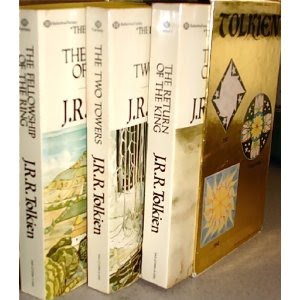
According to Amazon, a The Lord of the Rings Boxed Set Ballantine Books (1977). Here's the picture again--to tantalize you. :D

I'm looking at it now--I love the color illustrations, which were actually painted by J. R. R. Tolkien.

It's rather shiny and golden, don't you think? :D

Okay, I'll do it...

Pushing the button...

Now...

Okay, I've got the winner. :) What do you mean I have to tell you? I do? Aw... ;)

So the winner is Nathan R. Petrie! Congrats! If you wish to claim your prize (why did you enter if you don't? :D), then you can email your address to me and I'll send it to ya ASAP. :D Again, congrats!

Wednesday, August 4, 2010

Lord of the Rings Giveaway Trivia; Part Four

***Confused at what's happening at Teenage Writer or looking for the giveaway? Read about it here.

This is the last trivia question. Or is it? Actually, the last TWO. There's a bonus question. :)

As for the first one;

"What was the name of Frodo's mother?"

The next question is a bonus, and, like the others, cannot be answered if you have already answered a trivia question correctly.

"Where are the current locations of all seven of the palantiri at the end of LOTR?"

HINT; You can find most of the locations in the Appendixes of Return of the King, and the other locations are scattered throughout LOTR.

Once these questions are guessed, I'll announce the winner within the next couple of days. :)

Happy guessing! :D


*****UPDATE 6:19 P.M.********
The bonus question is still unanswered! Go ahead and guess! :)


Monday, August 2, 2010

Lord of the Rings Giveaway Trivia; Part Three

*****Looking for the Giveaway, or would like to find out more about it? Click here. Keep in mind, though, that the dates stated in that post no longer apply. :)

All right, it's time for part three of the LOTR Trivia! Here's the question;

"How many Orcs (and other enemies) did Gimli slay in comparison to Legolas during the Battle of Helm's Deep?" (i.e. How many did Gimli slay and how many did Legolas slay?)

Beware--unless my memory betrays me, the answer from the LOTR movies is different than the answer from the books.

Guess to your heart's delight, my friends! :D

We'll see if the next question is answered in a timely manner. I plan for it to be the hardest. :D

Friday, July 30, 2010

Lord of the Rings Giveaway Trivia; Part Two

Hey, guys and gals, I'm sorry I couldn't continue the Trivia as planned--I had completely forgotten I was leaving early for a family reunion. :) I may or may not be able to post due to lack of internet, but never fear--the giveaway shall go on! :D

To read about the giveaway (though the dates no longer apply), you can click here.

Now, for today's question...

"What are all of the names of Aragorn?"

HINT; There are seven that are the answers, but there may have been more.

Guess away! :D

Tuesday, July 27, 2010

Lord of the Rings Giveaway Trivia, Part One

****Looking for the giveaway? Click here to learn more about the giveaway and read the rules on how to get in on it.

LOTR trivia part one, everyone! For those of you who don't know or are hazy on the details of the rules on this, here it goes;

1) The first person who gets the question right gets one extra entry into the giveaway. If you don't know how to get regular entries into the giveaway, see my giveaway post.

2) If that person also gets it without searching in the book, he or she gets an EXTRA extra entry--i. e. two entries. Please be truthful when answering. :)

3) If you answer and receive an entry or two, you can't answer trivia again. Only one or two extra entries per person.

And it's also worth noting that all of the questions will be from the book, so please don't answer from the movie. :)

With that behind us, we can begin!

And for today's question...

"What was to be seen in the palantir of Minas Tirith after the Battle of Pelennor Fields?"

[HINT; The palantiri were those shiny balls of Sight that one could contact other people and see far things in. Saruman had one in Orthanc until Gandalf took it.]

Good luck, and keep your copies of LOTR close at hand! I'll be posting again tomorrow.

Let the guessing begin!

NOTE; If you find this too hard, then just mention it. >:) I may lower the difficulty if needed.

Monday, July 26, 2010

The Giveaway--the Tolkienish Something

It's here. Finally.

The giveaway.

The Tolkienish Something.

The Whizz-Bang.

All of that. Teenage Writer's first giveaway begins NOW.

How do you try to win that Tolkienish Something? You get entries. As you know, I gave a chance to guess the prize earlier and so get an extra entry, but, unfortunately, no one guessed it. :D

Anyway, there are THREE ways to get entries.

1) You must follow. Automatic entry (although this requires a comment to claim your entry) to those who already follow. To those who don't, please comment if you do decide to follow. :)

2) You must blog about it. I'd appreciate if you'd either contact me via email (see the page titled 'Contact Me' below the title of the blog) or comment on here to tell me that you blogged about it and give me the link so I can make sure that it's legit. :)

3) And for those smart cookies out there who are thinking, "It wouldn't matter if I did both of those; so will everyone else, and I'd have the same chances as if there were only one way to get entries." So that's why I have this; every day, Tuesday through Friday, I will have a post with some sort of LOTR trivia. The first person who answers correctly gets an entry. But if that first person answers correctly without looking it up, he or she gets a BONUS entry. :D I'll be relying on you guys and gals to be truthful, though. :)

Just for clarification, if that first person who answers the question correctly looks the answer up, but someone else who hadn't looked it up answers correctly after that person, the bonus entry doesn't count. :)

But what's the Tolkienish Something?


It's a The Lord of the Rings Trilogy Boxed Set, 1977 Ballantine edition. With a golden box. :) The edition I own is a little more faded and slightly frayed around the edges than this Amazon picture, but the books are in great condition for their age.

But wait! If you're thinking it's just some old copies of LOTR, prepare to be amazed. Literally just a little bit ago, I found this page on Amazon.com. Turns out this edition is quite collectable--and expensive. :)

The funniest thing? I bought it at a Goodwill for a dollar. Literally a dollar.

Two more notes;

One, I am happy to announce I will be able to ship to Canada! :D So no worries, those of you who live in Canada.

And two, if you are closely related to me, you cannot participate. ;)

Let the Giveaway begin!

Sunday, July 18, 2010

Get Ready for the Whizz-Bang!

Since I'm posting, it means that I am BACK! With a terrible sunburn that.... itches. It just hurt for the last couple of days...but now... it iches terribly...and the problem is...I can't itch it... or it'll hurt my sunburn....

So, to explain the title, sometime in the next couple of days you'll wake up and see that I have posted something with the title 'The Giveaway--The Tolkienish Something'. And you'll find out that elusive prize that no one could guess....

On a completely 'random' note, I wrote a post on Why Everything is Random...Or Not on my other blog. Beware, however--it is 1) very random and 2) it is very confusing. Only go there if you love randomness and are prepared for a Random bombardment. :)

Wednesday, July 14, 2010

One Year Adventure Novel--And More About the Giveaway

Recently (yesterday, in fact), I started the OYAN on my father's recommendation. For those of you who don't know (I think I mentioned this before), I started OYAN once, only for it to flop about a quarter of the way through.

So that means that Sadaar is on hold for the duration of OYAN--which might not be long, at the blistering speed I'm going.

A little bit on OYAN; It's a curriculum made especially for those teens who want to write an adventure novel--whether it be from pirates to fantasy. Daniel Schwabauer, an award winning author and maker of OYAN, is a fantastic speaker, especially when it comes to writing. If I ever get close to his experience in writing, I'd be published, without a doubt. So anyway, the sole purpose of OYAN is to get you to write an adventure novel--in one school year.


Besides this, I'd like to announce that I will be gone--again. I'm going to my aunt's wedding. :) So hang on tight! After this, and after a reunion with distant relatives and stuff, I will finally have time to do the giveaway!

Relating to this, no one has guessed what I'm going to give away yet. Here's what has been guessed and what clues I have given out;

THE CLUES

-It is has to do with Tolkien
-It is literally golden
-It is book(s)


THE GUESSES

-It is NOT "The Hobbit: Vintage Gold Hardcover".
-It is PROBABLY NOT Keeneye's. XD
-It is NOT "The Tolkien Encyclopedia Golden Cover".
-But it IS something that has "All That is Gold Does Not Glitter" poem in it.


Here's what you need to do;
-Name a SPECIFIC edition of the book that you're guessing
-You only have three guesses
-If you guess correctly--edition and everything--you will get an extra entry into the giveaway. :)

Guess away!

Monday, July 12, 2010

A Writing Timeline

This post is a sort of writing biography, timeline, of my writing. It pretty much sums up most of my writing experience. Please keep in mind that most of these dates are extremely tenative--I have a terrible memory, especially when it comes to dates. And be warned--this is a long post.

1997-1998
My mom read picture books to me

2001? 2002?
I began to read--small books at first.

2006, I think
I read Eragon, by Christopher Paolini--and I started to write small stories

2007
My writing began to get longer (although most of the plot was copied from other books, and the grammar was atrocious) and I had now determined that I wanted to be a writer when I grew up.
Late 2007
I wrote a short story for school (I wasn't homeschooled then) that was roughly 6 pages--less, on the computer.

Sometime in 2007
I wrote a short, 7 paged 'book' titled Attack of the Clones (I was really into Star Wars then), although it was a fantasy story. It centered around an old man and his sword, two snow leopards, and evil 'clones' that attacked a city. The prose was terrible, but I was so proud of it back then. :D It was meant to be a trilogy that I was coauthoring with a friend, but he never finished the second book, titled 'Snow Leopards'--or something like that. :)

Early 2008? Late 2007?
After accidentally deleting Attack of the Clones (which, by then, I had decided needed some serious editing), I found myself sitting at the computer desk, typing up a document that I christened, 'Jake's Unknown Story'. If you've read this blog long enough, you know what that particular document is now called.

The plot, by that time, was only partially developed (I had a vague concept of dragons, dwarves, and a portal), but it was halfway unique--later, that is--and I worked furiously on it for a week or so. By the time that week was done, I had fabricated more of the plot, decided on the races I was to have, and made a God-figure--which I had given much thought to, as I hadn't ever tried to integrate God into my fantasy before.

A week, eight pages, and a flurry of ideas later, my idea ground to a crawl. I didn't work on it quite as much, but in my spare time I whittled away at it.

You see, I had never completed anything that had a large, full blown plot. My previous 'works' (which totaled up to the two mentioned above) were either a school project or a random idea. This, which started out as a random idea, now had a plot and a feeling for the ending--something which I had never completed. I was rather intimidated by the idea of writing ALL of that content.

This was the problem I had.

Besides this, I had a short attention span, when it came to writing. I kept going off and starting more 'novels' (none of which passed 10 pages), though this stopped happening once my novel gained length.

Summer 2008
During this time I ran out of books--literally. I couldn't find any books to read. Of course, my definition of any was 'hardly any'. So I had several books to read, but I had a famine.

In the abscence of books, I turned back to writing. I wrote slowly, but surely, and my pages began to tally up.

2008-Early 2009
I worked on my book, off and on, and managed to get more than halfway through it.

Spring 2009, I think
We moved from our house, causing a problem--I had no computer to work on. A long lapse in my writing proceeded through two months as we tried to find a new house. At that time, I was about two thirds of the way through my novel, although I didn't know it then.

Summer 2009?
Dates are terrible in my mind. I just can't remember them. But sometime in 2009, we found a house and bought it.

Once moved in, my writing progressed very fast, both in quality and quantity. I wrote fast and furiously once I sensed I was finally nearing my goal of finishing my novel.

Later that Summer of 2009
To my great horror and disgust, I accidentally deleted 10 pages of my novel. This caused a terrible writer's block and lapse in writing that lasted nearly three months. It not only extended from my 'Unknown Story' but to all of my writing. Much of my writing ceased.

Late Summer, Early Fall 2009
I finally plucked up my courage and my determination to try and rewrite the deleted portion of my novel. It passed exruciatingly slowly, but eventually, within the week, I was back on track.

Being freed from this hindrance, I wrote like mad for the next week.

Finally, after nearly two years or so, I sat back one hot day with a sigh, and said, "I'm done." I felt a mixture of sadness and happiness, a strange sensation. I had finally finished my novel.

I realized that I must now edit my novel, a process that is still going on today.

Fall 2009
Editing begins. I checked out numerous editing books from the library, (none of which were any help) and edited and rewrote and cut--although I only did a bit of the latter.

During this time, I picked up a story that I had started during the early days of my writing famine and, after a lot of midnight thought, decided to work it in as a sequel to my novel.

Writing took off there like a bullet, and I had never wrote faster--or better--in my entire life. Some passages in that novel, like the Leviathan Chapter I posted earlier, are better than many of my current novel's chapters.

Early 2010
I finished my novel in record time--and it was longer than my first one! You can read a former blog post on it here.

Later that month, 2010
I started my third novel, the one I'm working on now. It's currently longer than both of my other novels were at rough draft--and I still have a lot left to write.

Sometime, during school, 2010
I wrote my first short story since 'Attack of the Clones'. You now know it as 'The Dark King'

Early Summer 2010
I submitted an allegorical short story of mine to a contest. It tied second place out of seven or eight other stories, which was exciting for me. :) If you would like to read it, you can go here and click on 'The Cornerstone'.

To date
I have over twenty thousand words on my last two novels and almost thirty thousand on my first--I expect to break thirty thousand soon. I have two completed short stories, one of which, the Cornerstone, is already completely edited and finished and the second, the Dark King, is being edited right now.

Besides this, I have a prequel alone and a sequel series in the same world as my current trilogy planned, and also a highly allegorical novella planned (and partially written) once I'm finished editing the Dark King. Several other, barely formed, ideas for novels not relating to my current trilogy are also floating around my mind.

----

Sorry--that was longer than I expected. :) Feel free to comment!

Monday, July 5, 2010

Review; Venom and Song

Venom and Song.

It's been talked about on this blog for some time--and on plenty of others. Finally, a month ago, it came out. I was priveleged to buy it less than a week ago. I took my time and digested it like the amazing book it was. But it surpassed my greatest hopes and expectations.

WARNING; This book may just change your view of Christian Fantasy forever.

Time is running out...

Trapped in the strange world of Allyra, the seven royal Elf lords struggle to control their new powers. With the Spider King chasing them and traitors in their midst, the young lords must unravel the mystery of the legendary Rainsong before the Elven race is destroyed forever. Standing in their way are peculiar and perilous creatures, a trap-filled fortress, and a dangerous secret.

Will the Prophecies come true? Or will the Spider King win again? [from the back cover]

Amazing. Inspirational. Heart-wrenching. Spiritual. All of these things describe Venom and Song.

If anything could be called epic, it would be this. The battles are breathtaking and detailed, but not so the reader would be grossed out. The plot is always twisting and turning. Every time I think the authors would do one thing, they do the opposite. Full of dangers, deception, hope, action, and mystery, Venom and Song is epic indeed.

The Christian elements in this book are taken to a much higher level then in the previous book. Some of the complaints against the previous book, Curse of the Spider King, was that there was little mention or insight into Ellos (the God-figure in the Berinfell Prophecies.) There is a lot more about Ellos in Venom and Song, however

One of the possible cons was that there were seven protagonists, preventing character development. Let me tell you; this doesn't happen. The characters developed wonderfully, and I cared for each one of them--the ultimate character goal of each writer.

The political intriugue in this book is pulled of masterfully as well. The only cons in this excellent book is that it ended far too quickly. :)

This book, Venom and Song, is number 8 on my Top Ten Fiction list. Seriously. I have read many books, but this one is one of the best.

I recommend this to any fantasy lover (and even to those who aren't!). Rated 9.65 out of 10.

Now, to endure the torture of waiting until the next book...

Giveaway--But Not Mine

Hey, everyone, this'll be just a short post. Seth is having a giveaway at his blog--of THREE copies of Venom and Song. Posting this will give me an entry, so here it is. Head on over there to check out the rules and stuff.

Also in that post is a shortenized version of his review, so be sure to check that out as well.

Friday, July 2, 2010

Whee! A Tag

Beorn has tagged me with the illustrious Candid Room Tag--which means I have to post picture(s) of my room without cleaning it up first. So prepare yourself to see the disaster area known as my room.

(above) This picture shows most of my room. My bed is a holy mess, my amp has cords hanging all over the place, and you can see the remaints of unpacking from my mission trip. If you zoom in close (if you can) on the table, you'll be able to see a published-in-1898 black leather Bible from Sierra Leone.

(above) My table, on which I put my radio/CD Player, clock, fan, library books, and miscellaneous junk. Behind the fan (which was on) you can see a drum from Africa. It was 10:52 PM when I took this picture, as you can see by the clock.


(above) My bookshelf, my guitars. Pretty much sums it up.

And last, but certainly not least...


My bookshelf--close up. If you can zoom in, feel free to take a look at the books. The only one whose title is clearly visible from this vantage is Brisingr, by Christopher Paolini. This isn't all of my books, however. Many of them are on my Amazon Kindle, COTSK included. Venom and Song, however, is sitting beside me with a bookmark stuck in the middle, so it wasn't included in the picture. :)

And just becuase I can, I tag ALL of my followers--those who have a blog. People who have already done it are an exception, like Beorn. :D

Heh heh, this should be interesting...