So yeah, six hundred words in a week isn't that great. It's all six hundred words of blood and sweat, however. Creating cultures isn't easy.
I did, however, finish this.
This is the "resource" I mentioned several posts ago to help writers to develop vibrant and real cultures. It was pretty fun to make—now I'm not quite sure what to do with it. Any ideas? Put it in DropBox, maybe, and let you guys download it?
I'm open to suggestions!
Now—for some procrastination and, hopefully, some more culture development.
After three minutes of intense thought, I have come to the conclusion that my least favorite part of writing is the actual writing.
Believe it or not, I love revision. I love getting knee deep in plot strands and character arcs. I love brainstorming. But when it comes down to the nitty-gritty work of actually writing down my ideas, well, things get hairy. It's like slogging through mud. Sometimes there are patches of sunlight, where the story shines out clearly and gloriously to the fog of my muddled mind. Unfortunately, they are just patches; and after they fade I have to work through the mess that they leave behind.
That isn't to say that I dislike writing. I love it. It's just that I love it the least of all of the stages of writing a novel.
This soliloquy does have a point. If writing is my least favorite part of writing, I must say that worldbuilding is my favorite part. Histories and cultures and sweeping mountain ranges and far-off plains of green; worldbuilding is delicious.
Right now, my consuming project is to tidy up the world where my story was born. Two years ago I wrote a 24,000 word history that dealt with the major turning points of this world. This year I'm working on overhauling that and adding detail to the world that it became.
The point of all this is to create a richer and more detailed world for my novel, stuff that I can add into the revisions that are coming in the near future.
However, I'm getting a little carried away. For instance, I have three main areas of worldbuilding that I'm working on: political geography, ethno-linguistic geography, and religious geography. It's not nearly as complicated as it sounds—that just means that I'm working on governments, cultures, and religions. Each of these has a map that I drew to illustrate my points.
The issue is, maps alone cannot hold all of the information I need to remember. I've got political maneuverings in my head that are just two fiefs on the paper.
So I was like, "Hey, I know! I'll create a document in which to store all this information!"
Four hours later, I had three thousand words, and, well, this.
And lest you think that those three thousand words are the whole of this treatise, let it be known that I have only finished the political section. The cultural and religious sections have yet to be written.
After awhile I start getting snarky, and stuff like this starts to happen. (Pardon the rough writing style. I haven't edited this at all.)
So maybe my worldbuilding isn't exactly conducive to getting to my revisions really quickly. But hey, it's a boatload of fun!
As the title says, my sleep schedule has been less than stellar of late. Mostly I get eight hours where I can, despite being a homeschooled highschooler with no job to speak of. Thus, I go to sleep sometime between ten in the evening and three in the morning, and I wake up sometime between seven in the morning and noon.
It's a long story, but life has been interesting.
My writing life is a different story. (Get it? Different story? Eheheheh...uh, yeah. Never mind.) I have been updating Reflecting the Mirror semi-regularly, however. If you want a more consistent blog, feel free to drop on over there. I write about anything from roosters to hand soap to theology. (My personal favorite is a wistful ramble about afternoons.)
Besides that, the two main writing things I've been working on are tied together.
First, I'm working on Tornado C's world-building. (Yes, I DID spend three months back in 2012 doing that...but you know how it is. Writing the novel exposed some holes in my world that need to be filled before I do my revisions. And also I just love working with story guts and all of the little details that make up a world. I get knee-deep in history.) I'd give you a scan of the fruit of my labors (a crisply penciled map) but unfortunately our printer throws fits. You'll have to wait.
The other thing I'm working on is developing a resource for fantasy writers (and myself) for creating unique cultures. Of course, since I never do things simply, I'm first creating a whole model of culture that will allow me to predict changes in culture when new factors are introduced. If the result doesn't flop, it should work very well for creating colorful and unique cultures.
If it does turn out, then maybe I'll share some of it here! Sound good?
One more thing. I'm finished with all of my Will Vullerman revisions, so a chance to read the newly revised versions for free is coming up soon. Keep your potatoes peeled! (That's the correct phrase, right?)
Till next time, how are your writing endeavors coming along? Read any good books lately? (I recently read Outcasts by Jill Williamson; before that, I read The Staff and the Sword series, which was the best fantasy series I've read in several years.)
(Disclaimer:
in order to give a thorough analysis, this review contains
spoilers. Normally I'd keep it
spoiler-free, but this review is primarily directed towards people
who have already seen Frozen. Also, it's been awhile since I've
seen the movie; so forgive me if I get any details wrong.)
When
I first saw Frozen,
I knew very little about the plot. Three pieces of information had
leaked through the social networks: one, that Olaf is apparently a
cool name; two, that pretty much everybody loved Frozen;
and three, that “Let It Go” was supposed to be the most
incredible song in the history of ever.
As a
result, I watched Frozen
with almost no idea of what was going to happen.
Just
like every movie, Frozen
had its ups and downs. I'll leave off aesthetic details like
animation style and song tunes and focus instead on theme and story.
First,
the positives! Frozen
marked a departure from some of the typical clichés of the “Disney”
genre. The most obvious is that Disney finally refuted the idea that
true love can be forged in a day. (For some reason, however, “Love
Is An Open Door” remains a popular song, despite the fact that one
of the singers ends up being a lying traitor and effectively
nullifies the song's message.)
More importantly,
the sort of love dealt with in the movie is, for once, not romantic.
It is instead the story of sisterly love—a much more powerful and
relevant theme in a culture that tends to neglect family
relationships.
Other highlights
of the movie included humor and originality. In terms of humor, Olaf
had the monopoly. He had more good lines than anyone else in the
movie, I think; my only disappointment is that he didn't melt at the
end. (I'm one of those people who love bittersweet endings – don't
hate me.)
One
of my friends once told me, “Yeah, humor doesn't really get better
as you get older—it just gets more vulgar.” Frozen
illustrated this very well, especially when compared to shows for
older audiences such as Sherlock.
The
banter was clean, without losing any of its potency.
Something
Frozen
also did well was creating a unique concept. I've told many people
before, I love Frozen
in
concept. Elsa's ability and the danger she brings to her family as a
result are perfect story-starters. Inadvertently causing everlasting
winter but being unable to find a way to reverse it is another
concept that is incredible fodder for a good story.
And yes, in terms
of story, there was a huge amount of potential. The first ten or
fifteen minutes were the best of the movie, as they provided a slew
of character development, background, and emotion in a very condensed
amount of time. Here is where Elsa received most of her development,
and it made her (by far) the best character of the movie.
Here
is a good place to transition into the drawbacks of Frozen.
Yes, there was a lot of potential—but sadly, a lot of it was
unused. The dilemma Elsa had was excellent—whether to maintain contact with her
sister and risk hurting her again, or to refuse to see her in order
to protect her.
Yet
the emotional punch only went as far as twenty minutes. I was under
the impression that the use of Elsa's gift could kill Anna, if Anna
remembered. (Think Doctor
Who
and the Doctor-Donna.) When Elsa revealed her gift and nothing
happened to Anna, I felt cheated of the story's tension. Before, the
cost of revealing her gift was to kill Anna; now it was only the
potential of
hurting her, which was hardly as potent. Elsa's nobility in hiding
herself from the world became, instead of a sacrifice, a self-imposed
independence.
Which brings me to my next point: the contradictory nature of “Let
It Go” and how it lessened my respect for Elsa. (In clarification:
I have no qualms with it, musically.)
My
reservations about the song could be summarized in one line: “The
cold never bothered me anyway.” If the song had been about letting
go of fear and hurt, then perhaps I would have liked it. But the
bent of the song was not towards letting go of the negative things
that her gift has given her. It was letting go of other people so
that she could be by herself with her gift. It represented a
rejection
of her self-sacrifice, a rejection of her responsibility. (“No
right, no wrong, no rules for me,” she says in the song.)
Her solitude became less and less a sacrifice, and more and more an
affirmation of “I don't need them. I can be myself here, alone,”
which is ultimately a destructive ideal.
That's what it says in the context of the story. But it seems like
the writer half-wanted to relate the song to the story, and
half-wanted to create a single all by itself. In context it is a
negative song—but taken alone, it seems more like a positive cry
for independence and the fearless use of her gift, which completely
contradicts where Elsa's character is at that point in the movie.
(The use of her gift in later scenes is anything but fearless.)
The end of the movie dealt with this fear well, and yet the song is
still written and interpreted positively, rather than in the negative
context. It's a contradiction that bothered me the whole movie.
This could have been solved fairly easily. If Elsa's choices,
motivations, and the prices for her actions had been clearly defined,
then there would be no contradiction, and the story would be
stronger. Instead her character was static and the potential emotion
that comes with self-sacrifice was wasted.
It's not the only contradiction, either. Anna, too, was
contradictory at times. While her impulsiveness never changed, the
way she related to her sister did. She exhibited bitterness at her
sister's isolation, which is the natural, human reaction.
Yet she pursued her sister, sang a duet about not living in
isolation—what happened to all those years where she never saw her
sister? Did she harbor no lasting character change as a result? Her
motivations were vague and confused.
The movie suffered from other issues. There was no real villain
character until Anna was betrayed at the end—and from the first
time the prince saw her, I knew that he was going to turn traitor.
And the conversation that ensued when he did was so rife with clichés
and wooden dialogue that it made me wince. Some of the songs also
had problems with being bland and overused—and everyone saw that
Anna and Christophe were “shipped” by the writers. (That is to
say, they would be a couple by the end of the movie.)
Plotwise, the story lacked a satisfying and even arc. The pacing had
problems. After the first ten minutes, which were heavy in character
development, Elsa's character came to a virtual standstill, and Anna
accomplished almost nothing to do with the plot till she got herself
stabbed with an icicle.
You
see, good stories rely on raising the stakes progressively higher to
keep the tension high; for half the movie, the stakes remained the
same. The tension only grew once the “ice” began to chill Anna's
heart. Raising the stakes too slowly or too quickly either cause a
movie to feel dragging or rushed. A good movie plot might progress
by developing the plots and raising the stakes thus: two, four, six,
eight, ten. It felt like Frozen
went like this: one, two, seven, eight, ten.
In
summary: Frozen
had a lot of potential, and a lot of highlights. The theme was
wonderful and sorely needed. But unfortunately, it was tainted by
irregular pacing, some generic subplots, and sloppy character
development. It was great in concept, poor in execution.
What
do you think? What was your opinion on Frozen?
They say
familiarity breeds contempt. This may not be true of writing, but it
is true that familiarity breeds all sorts of problems.
Yes, it can be a
problem when you know your writing backwards and forwards. Being
objective is the best way to make your revisions effective—it means
you can honestly point out flaws and delete those dear little scenes
that you love but really serve no use. But being too familiar with
your work creates a bias, and that makes it hard for you to polish
your prose.
This
happens a lot
in revisions. People like me tend to write their novels without
looking back. But when it comes to revision, my methods require
reading and rereading and rereading yet again. With all that
reading, I practically memorize the important parts of my story.
With The War Horn alone, I've completely rewritten the opening pages
three or four times, in addition to rereading them dozens
of times.
It's a problem. Your eyes get all glazed over, and your mind starts
skipping ahead because you've read it all before. As a result, you
miss out on a missing word here or there, or a structural problem, or
a bad spot of passive voice.
Recently I had this problem with my Will Vullerman revisions. One
story in particular has given me some trouble, and as a result I've
reread it as many as ten times in the last two weeks, in addition to
rewriting half a dozen key scenes.
Luckily, I'm coming back to the stories after nearly a year and a
half of letting them sit on the shelf. Because of that, the first
time I reread them, the stories were fresh. And since these are the
final revisions, this familiarity isn't as much of a problem.
But when familiarity gets really bad, I suggest doing one of several
things.
One, it's a good idea to leave your story on the shelf for a while.
Don't use this as an excuse for procrastination, but also recognize
your limits. Giving your story some space allows you to be fresh and
critical when you do happen to pick it up again.
Never
underestimate the power of a long hiatus. After taking a long break
from Tornado C back in 2012 (long before completion) I reread the
first six chapters several months later. Guess
what?
The
story had a gravity and power that took me by surprise. It was
actually good!
I'm currently taking the hiatus approach for my Tornado C revisions.
I finished it last October and I haven't touched it since. I'm
taking it slow; hopefully, come March, I'll pick it up again and
revise it nonstop till August. (Being my biggest novel at 90,000
words, it seems appropriate to go slow and steady. There are few
things worse than rushed revisions.)
Two,
try printing it out or putting it on an e-reader. I did this for my
Will Vullerman story; seeing it on my Kindle allowed me to see a lot
of technical mistakes that I had overlooked on my computer screen.
Three,
read it out loud and see what happens. You can read it to yourself
or to somebody else, whatever
works. You'll be surprised at how many mistakes and awkward phrases
you'll find! Badly constructed sentences will jump out at you like
the stroke of a red pen. (It's always awkward when this happens to
you when you're reading it aloud—to a critique group. Oops!)
Fourth, send the story off to other people to read. Sure, that
doesn't solve your own familiarity problem, but a great critique is
worth a dozen of your own revisions. It'll allow you to revise your
blind spots.
And, of course, there's always the possibility that you should stop
revising altogether. Sometimes enough is enough. Your story will
never be perfect, although perfection should always be your goal.
Eventually you'll have to let it go and declare it finished.
Whatever happens, try your best to view your writing from the
reader's point of view. That's the most important thing, in the end!
Here's a
confession: I've always had trouble with journals.
Some people have
trouble journaling because they don't have enough imagination; I have
trouble because I have too much. Inevitably, in the course of
detailing my everyday life, I get the notion that I'm narrating my
quaint and historic story to a future generation. This future
generation is nearly always post-apocalyptic, and since they don't
know the slightest about their past, it is my solemn and noble duty
to inform them, not only of my own life, but of every fact of
relevance in today's world.
Then, someday my
charred and yellowed journal shall be found, and the inhabitants of
that future world will gather round in wonder as their history is
unveiled before their eyes.
This gives my
journals the weight of bored historian. My life is interesting;
otherwise I wouldn't be living it. Things outside of my life, things
that would be considered important to a post-apocalyptic generation,
are the things that I find boring—and those are the things I find
myself writing down.
I've gone through
this process many times. The weight of mankind's history always
brings my pen to an awful stillness, and the journal is put on a
secluded shelf or in a dusty drawer, and I never look at it again.
School assignments have gone to this dreary death; even self-imposed
journals bow beneath this weight.
My perspective
changed a year back when I started a journal—not out of a sense of
duty to a post-holocaust race, but because I felt I needed a way to
keep track of when and where I did the significant things in my life.
When I did that, I wrote down only the things that I
found important or notable, and as a result, I was actually
interested in what I was writing.
Even this journal fizzled out, however—even the weight of the
everyday was too much. It took me a half hour or an hour to write
down the events of the day, and soon the days began to pile up. I
couldn't find the time for it all.
By
that time I had resigned myself to an existence devoid of journals—I
didn't have the time, energy, or responsibility to write
consistently.
Come
October, I went and had a birthday. I received two bound
notebooks: one brown and
black with yellowed pages, one gray and brown with white pages, and
both with all sorts of useful
information—in Chinese.
Now,
in spite of all the
complaints I have lodged against journals, I
have nothing against notebooks. They are among the most wonderful
things of the world, full of blank pages waiting to be filled with
anything you like—with lined paper to guide you and covers that
smell like fake leather and office stores. There are few things in
the world as magical as an empty page and a pen.
I sat on my gift for several days. What might I do with these great
and marvelous gifts? The trouble with the blank page is that it
ought to be filled, and I didn't know what to fill it with.
I
got rid of one notebook easily enough: I decided to consign my poetry
to this yellow-bound wilderness. (It worked out quite well; nearly
all the poems I write today are first written in the notebook with my
favorite extra-bold gel pen.) The second one gave me more trouble.
After a long while, I decided to give journaling another go—but
with a twist.
You
see, I have a page on my blog devoted to a list of my projects. I
give the date on which they were started, the date on which they were
finished, their current status, and so on. This page has never
ceased to fascinate me, because time to my consciousness is like an
alarm set for some early hour—it goes in one ear and out the other.
Dates and figures never seem
to stick in my head like they ought to.
This means that every time I visit that page, I get to rediscover all
of my own writing statistics. June 2009, you say? Marvelous! If I
had followed my gut, I would have felt sure that I wrote that
particular piece three years back, give or take a year.
I
decided to apply this principle to the concept of journals. What if
I did a sort of auto-biography, where I kept all of my writing
statistics in one place? I
would compile all that I knew about the time, place, and
circumstances under which I wrote my novels into one notebook, in the
form of a mildly sarcastic narrative. (If you want to know, the
writing style of my notebook is very similar to the writing style of
this post.)
The
idea took off. It required some research; to this day I can't recall
if my mom bought OYAN in summer of '08 or '09, since all I can
remember are snapshots of warm stone, the Wild West, and downtown
Wichita all running together like hot molasses. Keeping all that
information in one place was an excellent idea, because otherwise I'd
forget it all.
This way, I get to rediscover it once or twice a week, and enjoy how
my extra bold ink looks on the crisp white paper.
I started out narrating my past successes and failures, with a
humorous and objective eye. Twenty-five handwritten pages and dozens
of heartwarming statistics later, I brought my notebook up to date,
and I thought it good.
My notebook and my favorite pen.
To
keep my notebook current,
I established a custom. Every time I finished writing, I would write
of my exploits in the notebook. Sometimes I just wrote the date and
what I did, how many words I wrote, and so on; sometimes I talked at
length about this or that character and my personal opinion on how
the story is coming along.
And really, it's an invaluable resource. In the future, I will be
able to find the exact date on which I finished a particular novel or
short story, how many words I had written, how long it took me, and
so on. It's miles better than forgetting everything or keeping it up
on a blog page.
If you're cursed with perpetual absentmindedness, like I am, or you
just wish to keep track of your work, I'd suggest you try it. At the
very least, write down the dates and numbers in one place.
And since it's the only method of journaling that's stuck with me, I think I'll keep it.
Soundtracks are
often important to writers. For many of us, songs with lyrics tend
to be distracting; instrumental songs, on the other hand, have the
ability to inspire us and shape our work.
There are a number
of soundtracks that inspire me. And because I love analyzing things,
I compiled a list of my favorites, numbered them, and wrote down why
I loved them so much.
If anything, it's
something fun to read; and perhaps you'll find some stunning new
soundtracks you had never listened to before. I hope they inspire
you the way they have inspired me.
There are some
songs that are not included in this list; first, because there are
just so many good soundtracks; and second, because the main purpose
of this list is not only to find awesome soundtracks, but moving
ones. Accordingly, I have left out some awesome songs, such as
“Battle” from Narnia, which was my number thirteen pick, and
“He's a Pirate” from Pirates of the Caribbean, which was right
behind.
The other disclaimer I have is that, unlike my list of favorite stories, this list is subject to much more fluctuation. This list is true for the time being: I have no idea whether all of it will be true next month.
Now
presenting...my Top Ten Greatest Soundtrack Songs!
10. “Song of Freedom”
by Murray Gold
This
one made it to number ten for a number of reasons. One of them is
because it's a great piece of composing.
But
what makes it really wonderful is the Doctor Who episode it comes
from. I won't spoil anything, but it comes from one of the show's
highest and happiest points. (My sister cried all the way through
the scene.) In a way, it embodies the joy of that moment, and that
is what makes it so beautiful.
9. “Rise” by Hans
Zimmer
“Rise”
is a track that starts out remixing some of the earlier themes from
the soundtrack of The Dark Knight trilogy, including the main theme
right off the bat. (Pun intended.)
Just
after two minutes in, however, the track is catapulted from good to
great. One of the things about great soundtracks is that they embody
an ideal or emotion. That particular theme embodies Bruce Wayne's
struggle for justice and his paradoxical relationship with fear. He
“rises” above his fear and becomes it, one last time.
This
“struggle” soundtrack fit well with the climax of Tornado C. I
was sitting at the floor at the time, and wrote for an hour straight
with this song on repeat—and not only did this soundtrack fuel my
writing, it shaped it. The struggle of the song became the struggle
of my character, and without this song I don't think the climax would
have been half as good.
8. “Concerning
Hobbits” by Howard Shore
“Peace,
quiet, and good tilled earth.” “Concerning Hobbits” evokes
this feel very well, and every time I watch The Lord of the Rings and
come to this scene, it makes me feel wistful and nostalgic.
“Concerning Hobbits” captures the wonderful simplicity of the
Shire that Frodo left to save.
And
it's just plain beautiful stuff, too.
7. “Day of the Doctor Theme” by Murray Gold
(Disclaimer: the soundtrack I posted above is not the exact soundtrack that I had in mind when I listed this song, but a variation of it.)
One of
the trademarks of Doctor Who is dazzling twists, hints and strands of
plot that eventually bear fruit later in the episodes. And that's
what this song evokes: the final scenes where the last strand is
unraveled and the Doctor triumphs.
This
soundtrack also comes in my favorite part of Day of the Doctor, where
the Doctor flies in to the Tower of London hanging from the bottom of
the TARDIS. Ridiculously triumphant and confident, cocky and
laughable. It captures the spirit of the Eleventh Doctor
excellently.
6. “The Doctor's Theme” by Murray Gold
Eerie
and haunting. Alien and otherworldly. This is the theme of the
Tenth Doctor—heavy and lonely, but nevertheless hopeful and
soaring.
It
sends chills down my spine.
This is
also my tribute to “Vale Decem”, which I didn't put on the list.
It contains much of the same tune, but as the last song of the Tenth
Doctor shortly before he regenerated. It's heartbreaking and sad—I
don't listen to it so that I don't spoil the episode. That
contributed, at last partially, to the placement of this song.
5. “This is
Gallifrey” by Murray Gold
In “The
Sound of Drums”, there is a scene in which the Doctor talks of his
home planet, destroyed long ago. It's rich in nostalgia, haunting
and bittersweet and poetic. This is the soundtrack of that scene,
and it fits like a glove.
It is
haunting. It is bittersweet. It is nostalgic. It's a unique
song—no soundtrack that I know of has captured that same sort of
soaring nostalgia. Sad and wonderful, a fitting song for Doctor Who.
A bit
of a personal note here; I remember listening to it for the first
time while driving through a massive windmill farm in western Kansas.
The windmills, lonely and framed against the setting sun, seemed to
fit the haunting tune perfectly.
4. “Strength of a
Thousand Men” by Two Steps from Hell
There
are a lot of excellent Two Steps from Hell songs, but this one is
definitely my favorite. It's dark and deep and epic in the best
sense of the word. Then it rises to a climax in the middle and
simply flies from there, makes me shiver.
And
like someone fighting with the strength of a thousand men, it does
have a sort of intense and fierce quality about it that characterizes
a desperate conflict where good beats all odds and prevails in the
end. It's a feat of composing, that's for sure. My dream is to get
someone to haul a large portable speaker along behind me and play
this song whenever I do something awesome.
3. “The Greatest
Story Never Told” by Murray Gold
There
are a lot of Doctor Who soundtracks that could be called bittersweet,
but this one can claim the description more than most. Indeed, this
is a song that, perhaps, describes Doctor Who the best. Perhaps it is
more sweet than bitter—the beginning is beautiful and soaring.
Then it gets quieter and darker, with a mix of the “All the
Strange, Strange Creatures” theme thrown in. Then it reaches back
up into the heights with another soaring part, and then goes into the
Tenth Doctor's theme. Then it flies one last time and goes out with
a bang.
This
song is perhaps more personal than all the rest. I put this on
repeat when I wrote a short story called Dreamtreader. Besides
Tornado C, Dreamtreader is a personal favorite of all the stories
I've written, novels included. It's bittersweet and wonderful. I'm
not sure if the story simply fit the song or if the song shaped the
story; but either way, Dreamtreader and “The Greatest Story Never
Told” are tied together.
2. “The Breaking of
the Fellowship” by Howard Shore
My
favorite part in all the Lord of the Rings trilogy is the scene at
the end of the Fellowship of the Ring. Frodo decides to leave his
companions and go out alone, but Sam finds him out and swims after
him into the river. I've run out of adjectives to describe things,
so pardon me if I say, one last time, that it's a beautiful scene.
And
likewise, it's a beautiful soundtrack. It captures the emotion in a
way that few songs do, and as the flute plays alone, I can almost
hear them saying, “Don't you leave him, Samwise Gamgee. And I
don't mean to.”
Besides
The End of Time, no movie has ever come closer to making me cry, and
the soundtrack never fails to move me. It's wonderful, it's
touching, it's inspiring.
1. “Coming Back
Around” by John Powell
Why
this track, you might ask? Why is it number one?
Not
necessarily because I love the movie (although I do) or that it's my
favorite movie ever (it isn't). But judging the soundtrack on its
own merits, it's positively incredible. John Powell has the ability
to write a theme and manage to make it big and majestic without
drowning out the other instruments. And my goodness, the drums!
And
this one is marvelous. I've used the word soaring before, but I'll
use it again: this soundtrack soars.
It's almost made of the stuff. It's happy and sweeping and moving,
and then it kicks into
another gear entirely, leaving you nearly breathless at the end.
This soundtrack also, in some ways, represents the entire How To
Train Your Dragon soundtrack. The whole thing is a work of art.
(I'm particularly fond of “This is Berk”.) Although I've not listened to the whole album yet, I'm getting it in a package in the next week or two.
--
Well, there you have it—some of my favorite soundtracks. What are
some of your favorite instrumental songs? Any you think I missed
that ought to be on this list?
I hope you enjoyed hearing a few new songs—and, perhaps, revisited
a few old ones.
I write in a special Chinese notebook; it's not special because it is Chinese (that's the only brand of notebook we could find that had any decency), but because it houses some of my most precious literary creations.
That is, my poetry.
I'm mainly a novelist, but I must admit that I'm partial to a good poem. Depending on my mood, there are times where I'd rather write poetry than prose. (There are also times where I'd rather write theology than either.)
The poems have been accumulating lately, and I really don't know what I ought to do with them. But writing is meant to be shared, and it cannot be shared unless it is read, and it cannot be read unless it is published.
So I'll park my poems here to ease my mind. Take them or leave them; but if you do happen to read them, let me know what you think.
--
Don't Forget to Remember
I stood at the edge of an old mountain
ledge
And the western wind tugged at my
heart;
The sunset was red with dusky orange
spread
And I wondered if I should depart.
But standing still there I felt in the
air
A heaviness like saying goodbye;
I closed my eyes tight and around me
the night
Drew the stars gently into the sky.
You'll find me there, you'll find me
there,
Between reality, and memory
Trying to be what I could see
In everywhere, you'll find me there
In trying to meet what I had met
I remembered...that I forget.
I lay on the ground listening to the
sound
Of the wind whispering in the trees;
There I was, at the brink, of a vast
sea of ink
And from that sky came a chill midnight
breeze.
I dug my hand in the dirt as cold clung
to my shirt
It was that night in late December;
As I heard distant cars, I swore to the
stars
I would never forget to remember.
You'll find me there, you'll find me
there,
Between reality, and memory
Trying to be what I could see
In everywhere, you'll find me there
In trying to meet what I had met
I remembered...that I forget.
It was a night in late December;
As I heard distant cars, I swore to the
stars
I would never forget to remember.
--
Pine Needles
I ran to the basement
And opened the
door
And felt the pavement
Through linoleum floor
I fell to
my knees
And crawled to the back
Behind Christmas trees
My
reflection stared back.
The mirror was wide
And covered the
wall
But as I looked inside
I saw something small
There was
reflected
In the crook of the tree
Something unexpected—
You
were waving at me.
I jumped to my feet
And stepped through
the glass
And fell to a seat
Of knitted bluegrass
I blinked
several times
And I looked around
The air smelled like
limes
And wet earthy ground.
I stood and found you
In a
huge Christmas tree
Ornaments around you
Far bigger than me
The
wind swept you from
Your lofty green perch
And made my cheeks
numb
The air white like a birch.
The wind came and
brought
Me into the sky
The pine needles fought
Around me
and I
Sailed above a wood
Of conifer and ash
And saw what I
could
Through the pine needle mash.
I flew through a
cloud
And the pine needles cleared
The wind whistled
loud
Through a snowy white beard
And dropped me right
through
The misty cloud floor
To a mountain all blue
With
legend and lore.
You waited for me where
The water, cold
and meek
Is tucked between the air
And craggy mountain peak
I
saw my reflection
And looked from side to side
What greeted my
inspection
Was home, and I sighed.
I'll move the mirror
to
My room, and gaze inside
To stop and think of you
And me,
side by side.
And sometimes in the night,
I'll hear the quiet
sound
Of pine needles in flight
And dreams all around.
--
Glassy Glory
The ocean is blue and clear as a
bell
The waves are rising and crashing pell-mell
I look out for
rocks, and since none can I find
I pick up from the sand a tiny
sea-shell
It sinks through the waves and pays me no mind.
The
white foam sparks on the surface of the sea
And floats and swirls
on the waves around me
The high tide throws waves up over the
shore
To empty in a lagoon the color of tea
And disturbs the
crabs on the pond's sandy floor.
The underwater rocks are
slick with slime
The submerged plants are covered in grime
I
stand on the rock, look out at the banks
The sea's glassy glory as
endless as time;
Life is too wonderful not to give thanks.
--
Daydream Sails
When the music soars in your ears
And
the lyrics rise in your heart
When you're tired and ready for
sleeping
But your mind won't let you start;
When the sea
breeze like fog surrounds you
And the moon's face is veiled by
clouds
When the ocean's call gives you grounds to
Take leave of
the world's empty crowds;
When your heavy thoughts disturb the
night
And your gaze moves beyond this world
When your weary
eyes close and sight
The white sails of daydream unfurled;
Sail
the moon across the star-strewn sky
Find me there, in
almost-waking
Let the clouds go wandering by
While the stars
are magic-making;
For there is a half-asleep realm
Far-flung
across the briny blue
There, in the shade of a silver elm
I
will close my eyes and wait for you.
--
Homesick
Familiar dirt roads push me up on rocky
arms
To touch the sky, to taste the wind
with a taste like freedom
I spread my arms out like a cross—and
open
My eyes to a rusty fan stirring the
humid air
And the hanging white of my mosquito
net. I sigh—
Look about me, at dust and dirty tile.
I love
This place, dirt and all, but not like
my home. My home
Stirs my heart like the Kansas wind in
the pine needles
The arms of the bent old soldiers
keeping vigil.
I love it. I miss it. My heart hurts
for it.
The still small voice whispers, Was it
worth this?
Yes, I say—if not in my heart, in my
mind.
Would you do it again? Yes, with both
heart and mind.
Will I follow still further? Yes, a
million times yes,
Till my strength gives out, with my
heart and soul and mind.
But I can't help but return, it still
hurts. It was
Worth every illness and trial to
follow—but it still aches.
The still small voice is quiet, and
then I hear it like
The distant waves on a nearby shore,
carried on the winds
Of my home; I know, my child. I hurt
with you.
And I remain silent, and let the sea
breeze carry me to
So maybe I could
say that I'm busy, but the fact that nobody outside of Facebook knows
that I finished NaNoWriMo is my fault. Sorry, folks. Have a
screenshot:
And
okay, I'll admit it: every year, I promise myself that I won't flag
after NaNoWriMo, and every year, I succumb to post-NaNoWriMo
laziness.
So as
of right now, I still haven't finished The King of Three, although
I'm five to ten thousand words away from completion. But victory is
near, and with the last week of school coming up, my schedule will be
freed to finally wrap up the novel. All going well, I should have it
done before January at the latest.
With the completion
of The King of Three also comes the completion of the series as a
whole. And Tornado C is finished, too. Having those two novels off
my back will allow me to start on new projects, which is a huge
amount of fun.
But here's the
problem...I don't know where to start.
Right now, I have
somewhere between five and six incubating ideas ranging from sci-fi
to time travel to epic fantasy. And since my self-imposed rule is to
never do more than one major project at a time, this means that I
have to choose. Choosing is awful.
So,
with that in mind, I'm going to lay out some of my ideas and have you
choose—or, rather, adviseme
on what to choose.
Route #1:
Publish ALL the stories!
Well,
not really. But this is the more publishing-heavy idea of the three
that I'm outlining here.
If
I chose this route, my schedule would look like this:
As
soon as I finish the King of Three, I return to my long-neglected
Will Vullerman stories, revise the three remaining ones, polish all
five, get them some spiffy covers, and publish them on Kindle for
$0.99 each, and $2.99 collectively.
Then, after I finish that, I'll write the sequel to The War Horn,
tentatively titled “The King's Coffin”. I'll probably take a
break after finishing to fiddle with some other stories, but after a
while I'll revise it like crazy and send it to pre-readers to
critique. After that, I'll format, get a cover, and publish it on
Kindle for $2.99.
Since that work will take up quite a bit of the year, by the time The
King's Coffin is published, I'll probably start working on my massive
Tornado C overhaul and see what I can do to find it an actual name.
(I STILL don't have the foggiest what I'm going to name it. Titles
have never been my forte.)
The main idea behind this one is twofold: first, to get my work out
there so that when I have a “big” novel, one that I'll try to get
traditionally published, I'll already have a reader base and some
published works. Second, I have this crazy idea that my novels will
become runaway bestsellers and I'll raise enough money to go to the
2014 OYAN Workshop.
The big drawback of this route is that raising enough money for an
international plane ticket is improbable at best and impossible at
worst. And if I knew for sure that I wasn't going, I probably
wouldn't invest my time in publishing.
But there is this little thing of mine called hope...
Route #2: Become
a publishing hermit!
That is to say, take the absolute opposite of my previous idea and
publish nothing at all.
Under this route, I would mostly ignore my Will Vullerman stories
(again) and focus on new projects, rather than working with old ones.
First up would be a new novel completed with the OYAN supplement
“Other Worlds”. It would be a sort-of sequel to Tornado C, but
with less emphasis on “epic and dramatic” and more on “small
and structured”.
Depending on how long that project takes, I'll either work on The
King's Coffin (putting the publication date somewhere between Fall
2014 and Spring 2015) or go straight to Tornado C to start my
revisions. (As you can see, I'm serious about getting my Tornado C
revisions done.)
The main issue with this route is that Will Vullerman has been
ruminating in my head for awhile. It would be nice to get it to the
point where I can be done with it.
Route #3: The
Great Compromise
My
final route will take a middle road in between these two options,
giving me a foot in both trenches. I'd start out with publishing
Will Vullerman and then go on to work with my “Other Worlds”
novel. After all this, I'd work on Tornado C revisions. This would
put the writing
of “The King's Coffin” somewhere between Fall 2014 and Spring
2015.
The biggest issue with this one is that, if I was to give my foolish
hope a chance, I would want to go all in, rather than just publish
some short stories in hopes that I'll get thousands of downloads.
And
Route #4 is to ditch
school to write and publish all of the above. Needless to say, route
four is not an option, as much as I'd like it to be.
So there you have it! It's a choice between lots of publication,
some publication, and no publication; little chance for the Workshop,
even less chance for the Workshop, and no chance for the Workshop.
What do you think? I admit that I'm a little tied up about it.
Spare me some wisdom!
There
is always something that fuels a person's writing. If I had no
reason for writing, I would not be writing at all.
I've
written a lot about a lot of things. There have been multiple times
where I have set forth the reason why I write—the source of my
writing, the point of my writing, and so on. Sometimes I feel that I
have to rediscover the “why” of writing, and the resulting posts
are similar in many ways and different in other ways, like different
sides of the same cube.
And so
I'd like to clarify what I mean by “why” I write. I'm expanding
on what I've already written on this subject. The source of my
writing is, as always, Christ and what he has done for me. The
ultimate point of my writing is to portray the truth that God has
revealed. Those are the several “sides” of this cube.
So
let me make it clear, lest I am misunderstood, that in this post I am
not replacing God in “why” I write, but giving a different take
on it. I'm turning the cube over to look at a different side. This
side is, seemingly, more “secular”. (Really, there is nothing in
this world that is truly secular, since my faith affects everything I
do—even the things that don't appear to be spiritual.)
With that disclaimer, let me begin.
In a nutshell, I write to let other people feel what I feel.
When
I feel something, when I learn something, when I see something, when
I believe something, I want to share it with other people so much
that I feel like I could burst. When I am moved, I want to move
other people; when my moods are deep and thoughtful, I want to write
in such a way that makes other people feel introspective. I coined a
term specifically for the sort of poetry I love—if it's a good
piece of poetry, it gives me “deep feelings”, that sort of good
ache in your chest that makes you let out a deep breath and think of
stars and moonlight and the secrets of the universe.
I'm
a very, very intellectual type of person. I tend to process
everything through my sense of logic and order, analyzing and
organizing my thoughts. Debate is my forte, geometry is the only
kind of math I like, and a good argument is my brain candy.
That means that “feeling” is not usually something that happens
to me. Maybe my brain overcompensates, then, because what I do feel,
I feel in a way that is almost violent. When something affects me,
it affects me so much that it has to have an overflow, some way that
it can escape.
Except I don't talk. And I don't let many of my moods escape to my
appearance—they stay hidden beneath a normal face.
That makes it so that my only overflow, then, is in what I write. I
am not emotional; but when I have an emotion, it overflows. I write.
My moods spawn poetry, my beliefs are born onto paper. Feelings
become words, thoughts become poems, struggles become novels.
This
isn't just restricted to the emotional side of things, however. This
sort of thing happens to me intellectually too. When I learn
something and it “clicks”, I want to share it with other people
so that it can “click” for them too. When I understand
something, I want to write so that other people understand it too.
What I know, I want to articulate.
Obviously,
the most common outlet for my “intellectual” side is nonfiction.
This is why I enjoy debates, why I write articles, why I take notes.
But this also makes it into my novels—The Voice of God is a good
example. While my main themes were a mix of ideas, there was one
theme in particular that was very intellectual. I wanted to show
what the reality of hell looks like with people who had never heard
of Christ. The dilemma revolved around how fair it was to condemn
people for not believing in something they had never heard.
Of
course, I didn't treat it like I would treat a debate, and I
certainly didn't pause the novel to give a theological treatise. I
did, however, embed it in the fabric of the story so that it came out
organically. Faceless
“people who had never heard” became actual characters who
actually did die, leaving someone who thought he believed to struggle
with the idea of them going to hell. What he chose to do and say was
crucial with how the story would go and how it would resolve.
The
main point of that example is how a concept can become easier to
understand in the context of a story. Stories are how I show other
people what I feel and see and learn. An actual character is easier
to picture than a vague description of “those people”. It is
one of the many tools I use to have the reader feel how I felt—by
feeling how the character felt.
That
is why I write: I use what I write to help people understand what I
understand, and to feel
what I feel.
Articulating
the inarticulate is the job of the writer, and it's not an exact
science. “Inarticulate”, by definition, means that you can't put
it into words. But that doesn't stop us from trying. The test of
good writing is how close you get to saying what you wanted to
say—how close the reader gets to feeling what you wanted them to
feel.
And that's why I keep writing, and perhaps why all writers keep
writing.
We
have felt the indescribable...and we want to describe it.
(The title of this post may or may not be mildly sarcastic.)
At one time or another, we've all faced the same question: do I outline my novel, or do I wing it?
For years I was a staunch SOP writer—seat of the pants. I wrote four of my novels in that way. I prided myself in keeping myself from being "saddled" with a "constrictive" outline.
As it turns out, my first four novels were junk, mainly because they were my first four novels. My seat-of-the-pants writing style changed, however, when I was require to outline with OYAN. The result was The War Horn. It had a generic plot, but pacing was good, and I figured that outlining wasn't so bad after all.
Fast forward. I got to the point where I couldn't function without an rough outline. As much as I hated to admit it, SOP writing wasn't working out for me. I reluctantly laid down my arms and surrendered to the devil—er, outlining.
Now, before you throw up your hands in horror, let me say that I'm not insulting SOP writing. It can work, but it's not the most efficient way to write.
In the last year, however, I discovered a marvelous compromise—it gave me the open-ended freedom to do what I want with the tightly plotted structure of an outline.
It's called the Storyboard.
It goes by other names, too. Timeline is a popular word for it. You can do it on a computer or on paper—personally, I prefer the delicious inkiness of my Pilot G-2 Extra Bold.
But how do you do it, and how do you do it in a way that is the most effective?
Glad you asked. I'll show you. I plotted out a storyboard just for you guys, my illustrious blog-followers, with me and my Pilot G-2. (Pardon the blurriness of the scanned papers. This IS Africa, you know.)
I present to you: How to Storyboard in Four Easy Steps!
STEP ONE. Draw a line on paper, with two endpoints in the form of vertical lines. Also, title it, if you feel so inclined.
This is the easiest part of the Storyboard. (Although it seems that even a straight line was too much for me to ask. My line looks more drunk than sober.)
This is also a good place to find out how much your storyboard is going to cover. Point A is the first vertical line, and Point B is the second one. These represent separate events. All of the content in your storyboard should take place between these two events.
Sometimes I brainstorm two or three chapters in one storyboard; sometimes I brainstorm an entire novel. This year I wrote three storyboards for my NaNoWriMo novel, one for each POV.
STEP TWO. List the main plot points between Point A and Point B, indicated by smaller vertical marks spaced throughout the line.
As you can see, that's exactly what I did below. The main plot points of the story are summarized. If you're doing a storyboard for an entire novel, then you should take careful note.
There are four crucial moments that your novel storyboard should include. The first one is the event that sets the novel in motion ("Turkey's brother is brutally eaten"). The second is the moment of decision where the main plot of the novel starts ("Turkey turns to the dark side"). The third is the black moment, the point at which everything goes wrong just before the climax ("Saves his sister by sending her to another dimension"). The last one is the climax of the novel ("Has a change of heart and sacrifices himself"). If any of you have done OYAN, you should be familiar with these concepts already.
If you're simply mapping out a scene or group of scenes, then just summarize the main developments in the story. None of this is set in stone, which is the beauty of the Storyboard. Random ideas are welcome.
The point of this part is to map everything out so that you know the general direction of your story. Having the end in sight helps in two ways: first, it'll give you the opportunity to foreshadow and have the beginning make sense in light of the end; second, it'll help you know what you're going to write next.
STEP THREE. Expand your plot points, giving them more detail and direction. Specifically, focus on visualizing where the story is going.
This is probably the hardest part of the Storyboard. There are two objectives here.
First, give detail to the summaries that you wrote in Step Two. In the "Turkey's brother is brutally eaten" section, for instance, I gave a number of details: the turkey sobs, buries him in corn, and when the turkey priest stands up to give a few words, he talks about non-violence. All of these are a consequence of the plot point and expand it. This part of the Storyboard will require some brainstorming.
Second, visualize the summaries. Visualizing where the story is going to go is a huge advantage when you sit down to write it. If you can follow the "movie" of your story in your mind, you're going to be able to follow it with your keyboard.
Sobbing is a great visual; burying him in corn is a poignant and unexpected detail. (Apparently I had neglected to remember that since the turkey was eaten, there wouldn't be a body to bury.)
Another thing that this step does is to flesh out the practical consequences of your plot points. As a result of Turkey's sister being a target for someone's Thanksgiving dinner, Turkey has a pretty awful decision to make. Does he save his sister and kill the humans, or does he stand by while his sister dies? Luckily, there was a wise buzzard priest walking by at the time and informed him of the concept of inter-dimensional travel.
Where would we be without random priests?
This is also the point where I had an epiphany about the ending of the novel. You may find that the same sort of thing happens to you. If you're poring over your story details, new ideas are bound to come.
There's another great side-effect of seeing all of your ideas in one place: it becomes possible to connect them together in a way that you hadn't thought of before. You'll find a prime example of this in the "Saves his sister" column where I wrote Circularity in big underlined letters.
STEP FOUR. Finish expanding your columns and jot down any ideas that may come to you, whether or not you will actually use them.
This one is pretty straightforward, although it may take a little bit to brainstorm.
Ideas are often seen with a question mark, and sometimes they get crossed out. My killing spree idea, for instance, got nixed about five seconds later. However, this establishes the fact that Turkey is struggling with nonviolence and his need for revenge, so it was still an integral part of brainstorming.
The nice thing about blank space is that it motivates you to brainstorm something to fill it, and as a result I got a few ideas that I wouldn't have otherwise thought of.
Once your blank page is filled with notes and scribbles, lean back and give yourself a high-five, if no one's watching. You've written a Storyboard, and a page full of inky ideas isn't a bad day's work.
And this way, you won't forget everything you brainstormed when you wake up tomorrow morning. I've had it happen, and it's not pretty.
Please ignore the fact that the vast majority of my recent posts have sentences instead of titles. Titles are supposed to summarize the posts, anyway.
We're a week away from NaNoWriMo now, and as usual I haven't planned an iota of my novel. Not even in my head. Haven't thought about it, at all. Preparing so far has consisted of reading the previous books in my series (I'm working on Book #4 of The Prophecies this year) and procrastinating on writing the last two chapters of tVoG (which is Book #3 and didn't get finished last year).
Also, because one of my great vices is forgetfulness, I neglected to inform you guys of a huge development in my writing career as of a couple weeks ago.
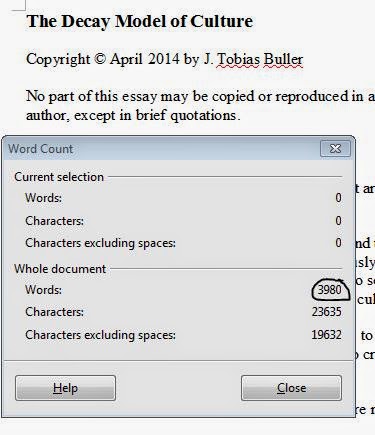
The picture will pretty much tell the tale, minus the convulsions.
In case you were wondering, the name of this particular document was Tornado C. And as of October 12th, I passed 90,000 words and wrote THE END on this epic that has taken me the last twenty-one months to brainstorm and write.
All I'm saying is that revision's going to be a trip. I don't even want to think about it right now.
In the meantime, I'm basking in the glory of actually finishing something and trying not to think about the novel I have to be ready to write in a week. (And, y'know, actually finishing the book that came before it.)




.jpg)


